Septic System – Saint-Hippolyte
EcoFlo, Bionest & Enviro Septic installer.


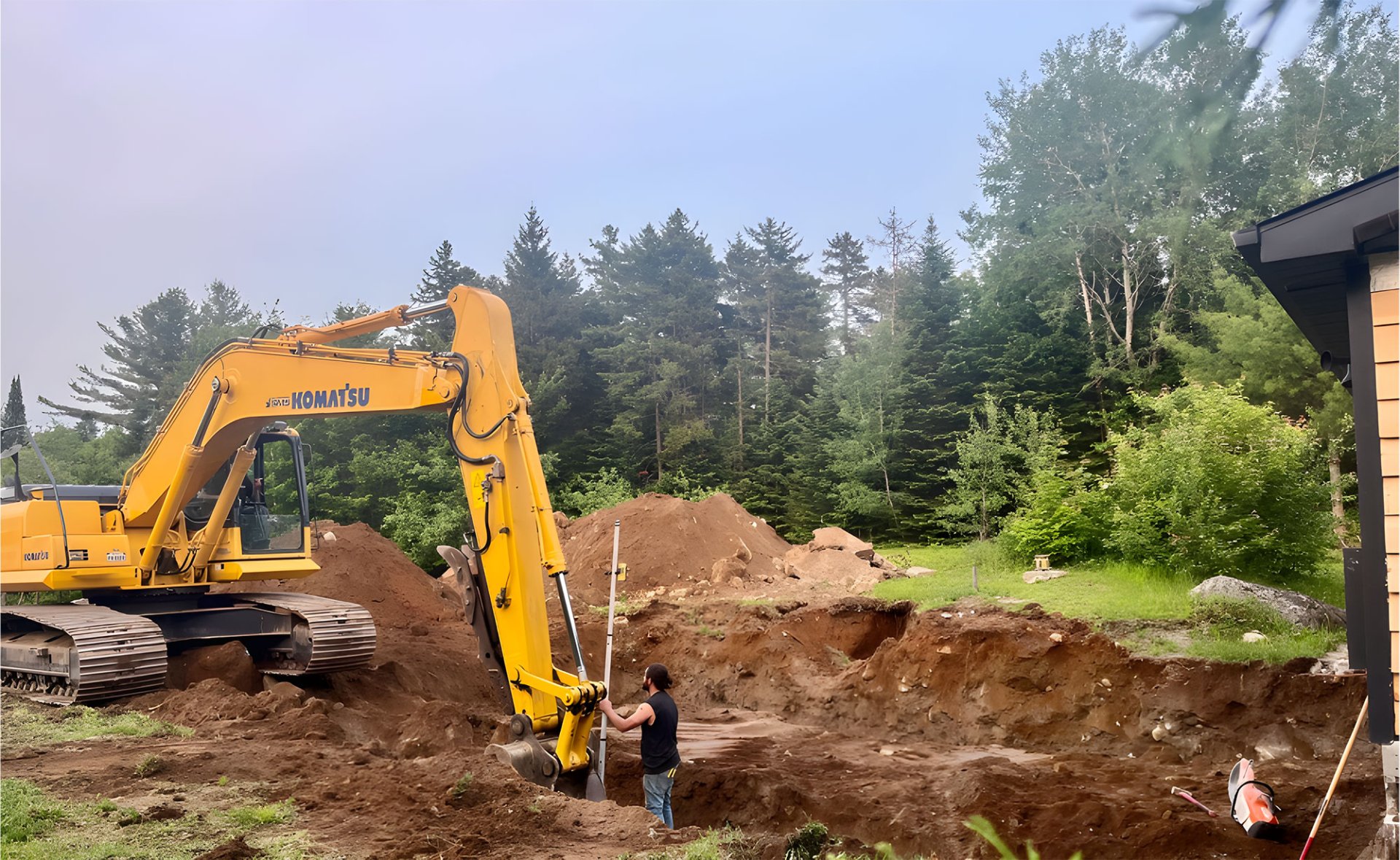
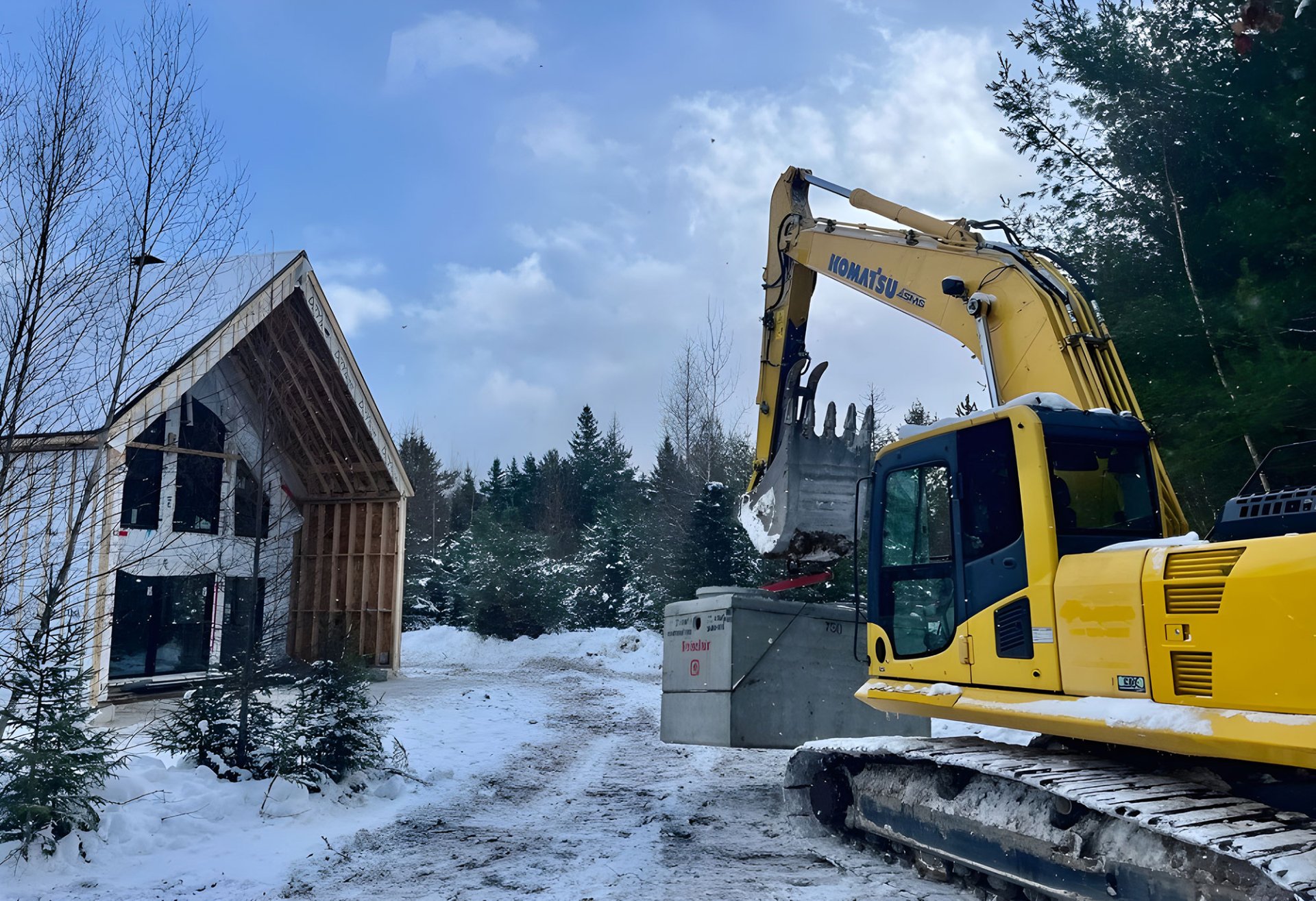
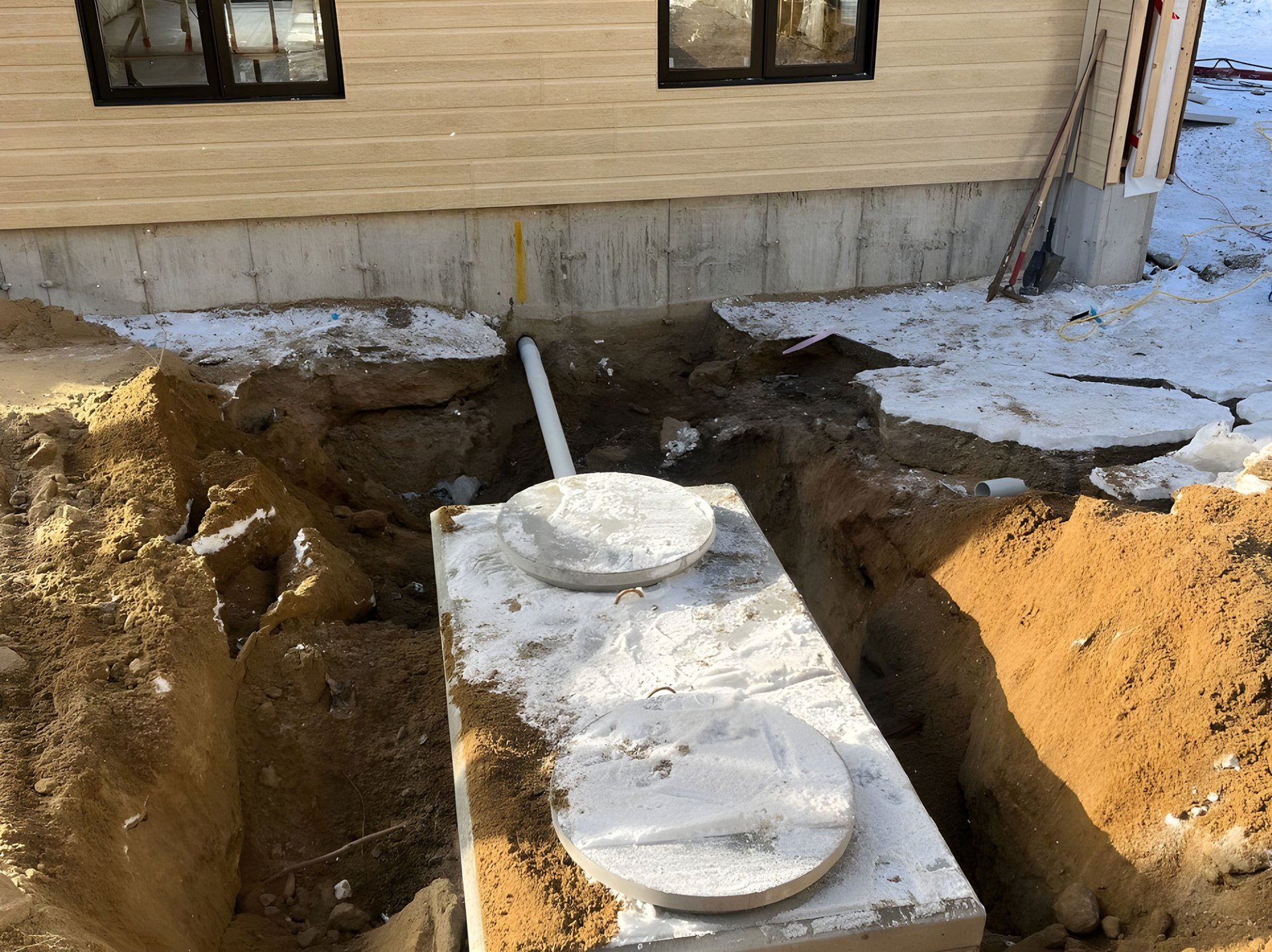
EcoFlo Installer, Bionest and Enviro Septic.

1. Septic tank
The raw waste water flows into the septic tank. The solids are deposited at the bottom of the pit, and the foam floats on the surface. The partially clarified liquids flow from the pit through a pipe that leads to the Ecoflo biofilter.
2. Ecoflo biofilter
Inside the Ecoflo biofilter, a flip-flop disperses the wastewater on perforated plates. Waste water is drained through the plates and streams onto the all-natural filter. The filter acts as a barrier that removes pollutants through two processes: physical filtration and biological digestion.
3. 3. Additional treatment or final dispersion
Once the wastewater has perched through the filter, the Ecoflo biofilter evacuates the effluent downstream for further treatment (if required by local regulations) or safe discharge into the environment.
What is a Bionest system?
1. Septic tank
The raw waste water flows into the septic tank. The solids are deposited at the bottom of the pit, and the foam forms on the surface. The partially clarified liquids flow from the pit through a pipe that leads to the Bionest reactor.
2. The first compartment of the reactor
An electric air pump (aerator) operates 24 hours a day, 7 days a week, to pass air through membrane diffusers. These diffusers produce tiny bubbles in the first compartment of the reactor. The oxygen in the bubbles promotes the growth of bacteria attached to plastic substrates. When bacteria digest organic pollutants, particles fall to the bottom of the compartment and form sludge. The treated waste water then flows into the second compartment of the reactor.
3. 3. The second compartment of the reactor
Waste water is clarified in the second compartment. A recirculation pump then returns some of the treated waste water to the septic tank, where the remaining particles are deposited and form sludge.
4. Additional treatment or final dispersion
Some of the waste water from the second compartment of the reactor does not return to the septic tank. The system removes this waste water downstream for additional treatment (if local regulations require) or safe discharge into the environment.